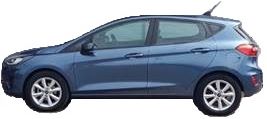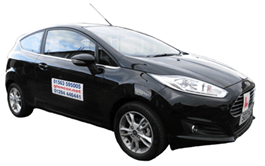
Familiarise Yourself With The Driving School Car Controls


Spent more of your driving lesson time practising driving rather than being parked up at the side of the road. Familiarise yourself with the driving school car controls using the following diagrams and descriptions.

Your driving school instructor will always assist with any controls that you don't understand.


Why is it that when you're driving and looking for an address, you turn down the volume on the radio?

Make the most of your driving school lesson time,
learn some of the driving school car controls now.


Back-up Driving School Car Available 24/7


Most insurers supply driving schools with a replacement car within the next 24Hrs. This would be useless if the main car was unavailable on the day of your lesson. Or worse still, on the day of your Driving Test.

Also, for just a breakdown most insurers do not supply a replacement car.

Your Glencor Driving School instructor has a second car available 24/7. The second car is also fully equipped and insured for driving school lessons and tests.


Glencor Driving School has helped others to pass,
after they were let down by their own instructor.

So don't be let down by a breakdown

Call David, the Glencor Driving School instructor


Friends don’t let friends drive drunk.

Controls On Or Near The Driving School Car Steering Wheel


Car Controls Located On Or Near The Steering Wheel Of The Driving School Car


Driving School Car Driver's Controls
Top

Direction Indicator Lever - When using this lever it is best to keep your thumb loosely over the steering wheel and extend your fingers to push the lever up for a right signal or down for a left signal.

Full beam Lever - (This is the same lever as the Direction Indicator Lever). When using this lever it is best to keep your thumb loosely over the steering wheel and extend your fingers to push the lever forward (away from you, then release) to switch on the full beam headlights. To switch off the full beam headlights push the lever forward again (then release). To flash the full beam headlights (to warn other road users of your presence) pull the lever back (towards you) then release, the full beam will only remain on while the lever is held back (towards you).

Wiper Lever - When using this lever it is best to keep your thumb loosely over the steering wheel and extend your fingers to push the lever up. There are three settings: -

  • Push the lever up one level (first click) for intermittent wiping. Use this setting for misty or very light rain conditions. For your Glencor driving school instructor's car the frequency of the intermittent wiping has a default setting but it can be temporarily changed by first flicking the lever up then releasing without clicking all the way into the first level, then by clicking the lever up to the first level. The time between the flick and the click will now be the time between subsequent wipes of the wipers. When the wipers are switched off the default setting is re-established.
  • Push the lever up another level (second click) for constant wiping. Use this setting for light to moderate rain conditions.
  • Push the lever up yet another level (third click) for fast constant wiping. Use this setting for very heavy rain conditions.

Headlights and Tail Lights Switch - This is a turn switch with three settings and each setting can be reference with respect to a clock face: -

  • 11 o'clock - Off position.
  • 12 o'clock - side lights and tail lights. Use this setting in conditions of moderately low light e.g. dusk or dawn, cloudy, etc.
  • 1 o'clock - dipped headlights and tail lights. Use this setting at night and in conditions of very poor light.

Interior Light Button - (This is the same switch as the Headlights and Tail Lights Switch). Press the button to turn the interior light on/off.

Tailgaters.
Don’t try to speed away. You may even need to slow, if the road ahead is busy, thereby reducing the chance of having to slow abruptly for anything in front of you and thus avoiding a rear-end shunt.

Horn Buttons - Press either of the horn buttons to sound the horn.

Speedometer - Indicates the travelling speed of the car.

Rev Counter - Indicates the turning speed of the engine.


Top

Engine Temperature - Indicates the temperature of the engine. Important because an over heating engine can seize.

Fuel Level - Don't want to run out of this! For your Glencor driving school instructor's car, if the low fuel light illuminates then you still have over 50 miles before the car will run out of fuel.

Fog Light Button - Most cars are set so that the fog lights will not switch on until the dipped headlights are switched on. To switch on the fog lights, first switch on the dipped headlights, then press the fog light button. To switch the fog lights off, press the fog light button. For your Glencor driving school instructor's car the fog lights are automatically switched off when the dipped headlights are switched off.

Headlight Lift/Drop Control - This control enables the headlight beam to be raised or lowered thus controlling how far along the road, and how high, the lights will shine.

Dashboard Illumination Control - Use this control to set the illumination of the dashboard controls to your preferred level in low light or night time conditions.

Driver's Air Flow Direction Change Control - Use this to direct the interior air flow e.g. to your torso, to your face, etc.

Cd and Radio Controls - Pick your desired channel, change between radio and CD player, change volume of play.

Hazard Warning Button - Press the button to switch the hazard warning lights on/off.

Air Temperature Control - Turn the dial to set the interior air flow to a desired temperature.

Air Speed Control - Turn the dial to set the interior air flow to a desired speed.

Air Direction Control - Turn the dial to set the interior air flow to a desired direction e.g. face, face and feet, front windscreen (very quickly clears the front windscreen and the side windows of any condensation), etc.

Rear Windscreen Demister Button - Press the button to switch the rear windscreen heater on/off. Should only be used to help clear the rear windscreen of condensation i.e. when the condensation has cleared switch the demister of.

Driver's Air Flow Direction Change Control - Use this to direct the interior air flow e.g. to your torso, to your face, etc.

Passenger's Air Flow Direction Change Control - The front seat passenger can use this to direct the interior air flow e.g. to their torso, to their face, etc.

Top